

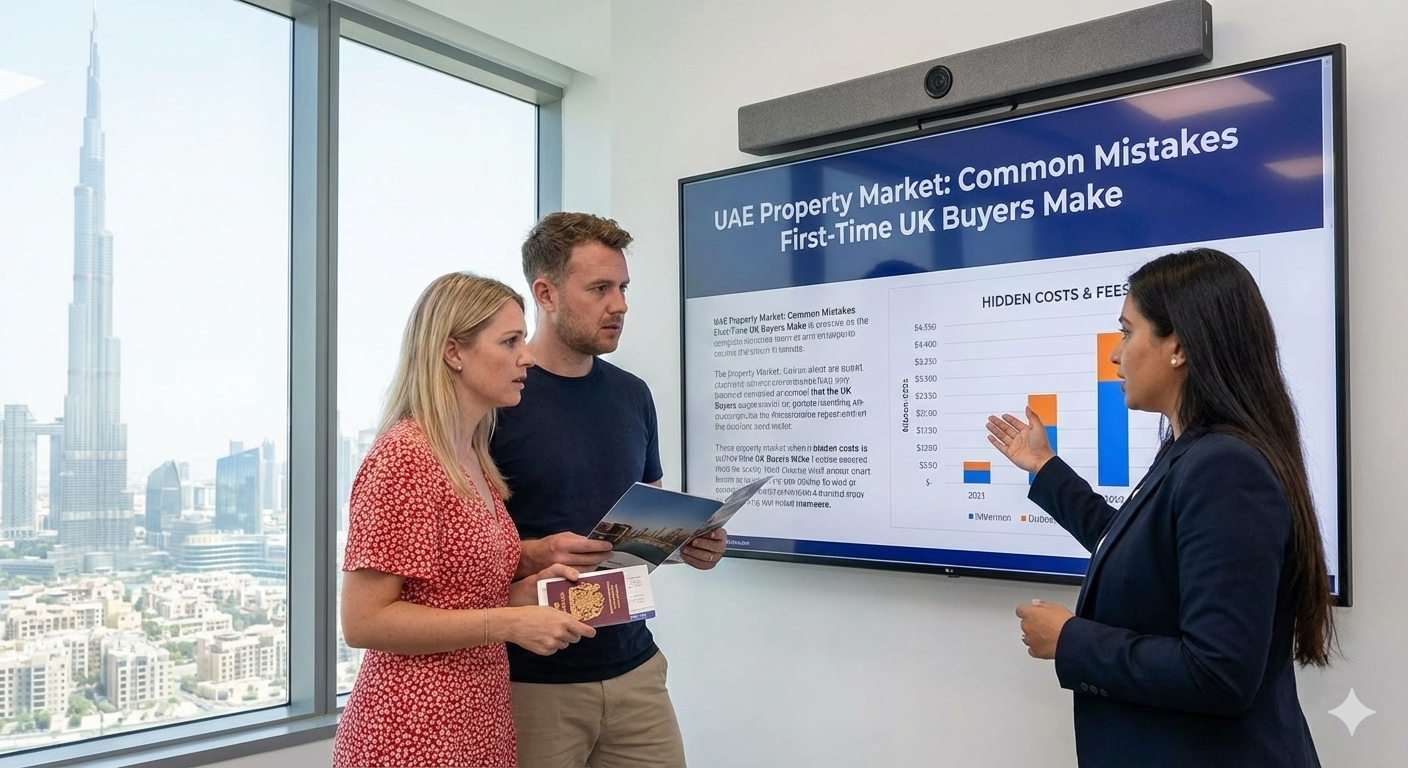
As interest in UAE real estate continues to grow among international investors, UK buyers remain one of the most active segments entering the Dubai and wider UAE property market. Drawn by strong rental yields, tax efficiency and long-term growth prospects, many British buyers see the UAE as an attractive alternative to the UK market.
However, industry experts note that first-time UK buyers often make avoidable mistakes, largely due to applying UK property assumptions to a market that operates very differently.
Table of Contents
Different Markets, Different Rules
While both the UK and UAE have mature real estate sectors, their ownership structures, financing norms and transaction processes vary significantly. Entering the UAE market without recalibrating expectations can lead to higher costs, financing strain and delays in completing transactions.
According to property professionals, the most common issues arise around upfront costs, mortgage structures, ownership eligibility and transaction sequencing.
Upfront Costs Catch Buyers Off Guard
One of the biggest surprises for UK buyers is the amount of cash required at the start of a UAE property transaction.
In addition to a down payment typically higher for expatriate buyers purchasers must factor in:
- Dubai Land Department (DLD) registration fees
- Trustee and title registration costs
- Real estate agency commissions
- Administrative and processing charges
While the UAE does not impose stamp duty or annual property taxes, transaction-related fees are front-loaded, requiring buyers to plan liquidity carefully.
Shorter Mortgages and Heavier Repayments
Financing structures in the UAE differ markedly from the UK. Whereas UK buyers are accustomed to long mortgage tenures and relatively predictable repayment profiles, UAE mortgages usually come with shorter terms and lower loan-to-value ratios.
This results in:
- Higher monthly repayments
- Stricter bank approval criteria
- Greater emphasis on income stability and residency status
Buyers who assume UK-style long-term financing often find affordability tighter than expected.
Freehold Ownership Is Location-Specific
Another critical area of misunderstanding involves property ownership rights. In the UAE, expatriates can only own property outright in designated freehold zones. Other areas may permit long-term leasehold or usage rights, but not full ownership.
UK buyers unfamiliar with these distinctions may:
- View properties they are not legally eligible to own
- Commit prematurely without confirming ownership classification
Understanding freehold eligibility early is essential to avoid wasted time and legal complications.
Off-Plan Purchases Require Extra Due Diligence
The UAE has a robust off-plan property market, offering early access, structured payment plans and competitive pricing. However, off-plan purchases demand thorough due diligence, including:
- Verifying developer approvals
- Reviewing escrow arrangements
- Assessing delivery timelines and track records
For overseas buyers, legal clarity and professional advice are particularly important before committing funds.
Fast Transactions Demand Preparation
Unlike the UK, UAE property transactions can move quickly once documentation is in place. Delays typically occur when buyers are unfamiliar with the process order such as deposit payments, NOCs, trustee appointments and title transfers.
Experts advise that buyers prepare financing, documentation and approvals in advance to ensure a smooth completion.
Tax-Free Does Not Mean Cost-Free
While the absence of annual property tax and capital gains tax remains a major attraction, ownership still comes with ongoing costs. Service charges, maintenance fees and community expenses can significantly affect returns if not budgeted properly.
A Market of Opportunity with the Right Approach
Despite these challenges, the UAE remains a compelling destination for UK property investors. The key lies in understanding that the UAE market is not a replica of the UK system.
With the right planning, professional guidance and market awareness, UK buyers can avoid common pitfalls and take advantage of the UAE’s strong fundamentals, lifestyle appeal and long-term growth potential.
