

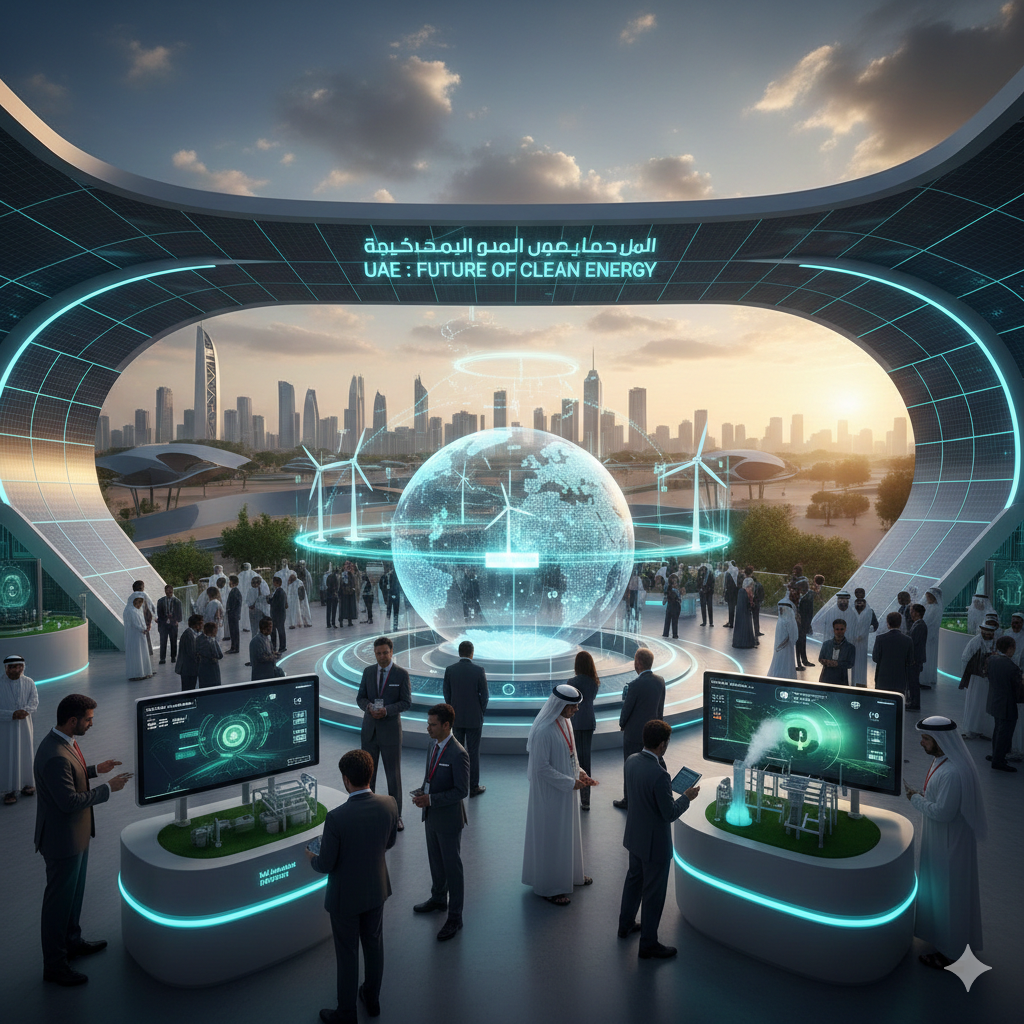
The United Arab Emirates has reinforced its position as a global frontrunner in clean energy transformation, unveiling ambitious progress and future-ready strategies at the International Renewable Energy Agency (IRENA) Assembly in Abu Dhabi.
Addressing global energy leaders and policymakers, the UAE announced that it has doubled its renewable energy capacity in just two years and is firmly on track to more than double it again by 2030, underscoring its commitment to sustainable growth and long-term energy security.
Table of Contents
Accelerating the Clean Energy Transition
According to the UAE Ministry of Climate Change and Environment, the country’s renewable energy capacity increased from 3.1 gigawatts in 2022 to 6 gigawatts by 2024, with a target of 14.2 gigawatts by 2030. This rapid expansion reflects the UAE’s broader economic strategy to diversify beyond hydrocarbons while ensuring stable, reliable power for future growth.
Speaking at the 16th IRENA Assembly, Amna bint Abdullah Al Dahak, Minister of Climate Change and Environment, highlighted that the UAE is no longer focused solely on adding renewable capacity, but on integrating renewables into resilient, round-the-clock energy systems.
AI, Storage and Baseload Clean Power
A key highlight of the assembly was the UAE’s shift toward combining renewable generation with artificial intelligence, digital systems, and large-scale energy storage. This integrated approach enables renewables to function as dependable baseload power traditionally dominated by fossil fuels.
One flagship example is a newly launched hybrid solar and battery storage project in Abu Dhabi, developed by Masdar and Emirates Water and Electricity Company (EWEC). The project includes:
- 5 gigawatts of solar capacity
- 19 gigawatt-hours of battery storage
- The ability to supply 1 gigawatt of uninterrupted clean electricity
The facility uses AI-driven forecasting and automated dispatch systems to manage intermittency and deliver stable power, offering what officials described as a “glimpse into the future of global energy systems.”
Clean Energy as an Economic Opportunity
Beyond technology, the UAE used the IRENA platform to emphasise the business and investment potential of renewable energy. IRENA Director-General Francesco La Camera noted that renewable energy has become the most competitive source of new electricity generation globally, describing the energy transition as “irreversible.”
Global investment in the energy transition reached $2.4 trillion, including nearly $800 billion in renewable power generation. However, to stay aligned with the Paris Agreement, annual investment must rise to over $5 trillion, creating significant opportunities for governments, investors, and the private sector.
Global Commitments and Climate Leadership
The UAE also reaffirmed its role as a global climate partner, highlighting major international commitments, including:
- $1 billion AI for Development Initiative for Africa
- $50 million to a Pacific renewable energy partnership fund
- $50 million to a Caribbean renewable energy fund
These initiatives support energy security, climate resilience, and sustainable development across emerging markets, reinforcing the UAE’s growing influence in global climate finance.
A Strategic Vision for the Future
As the host of IRENA and a key voice in global energy discussions, the UAE continues to demonstrate how clean energy, advanced technology, and economic strategy can converge. Its focus on scalable renewables, AI-enabled systems, and international collaboration positions the country not just as an energy producer, but as a driver of the global clean-energy economy.
For businesses and investors, the message from Abu Dhabi is clear: the future of energy is clean, digital, and already underway in the UAE.
