

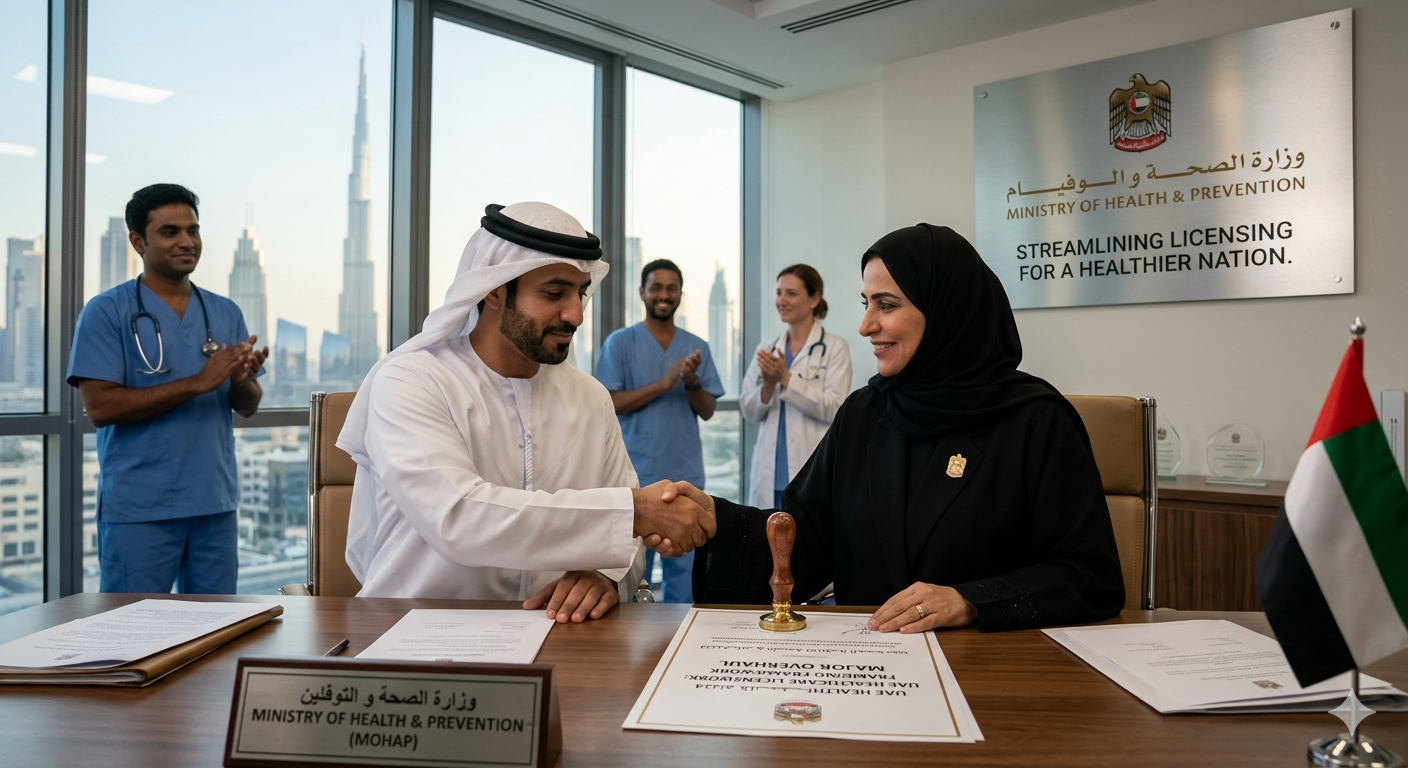
The United Arab Emirates has introduced a major overhaul of its healthcare licensing framework, marking a significant regulatory development aimed at strengthening workforce capacity and improving the efficiency of the sector.
The reform, announced by the Ministry of Health and Prevention (MoHAP) in coordination with relevant authorities, is designed to streamline licensing procedures, accelerate workforce entry for qualified professionals, and align healthcare regulations with labour market requirements.
Table of Contents
Medical Faculty Allowed to Practise in Healthcare Facilities
Under the revised framework, faculty members at the UAE’s medical colleges and universities, including physicians and other healthcare professionals, will now be permitted to practise within healthcare facilities while continuing their academic responsibilities.
This move is expected to strengthen the link between academic medicine and clinical practice, enabling experienced faculty professionals to contribute directly to patient care and healthcare service delivery. In addition, teaching hours will count toward Continuing Professional Development (CPD) requirements in accordance with approved medical education policies.
Removal of Six-Month Waiting Period
A key change under the new licensing framework is the removal of the six-month waiting or experience requirement previously applicable to several nursing and allied health professions.
The revised rule applies to categories including registered nurses, assistant nurses, medical laboratory technicians and technologists, respiratory care technicians, and healthcare assistants.
Importantly, the amendment covers graduates from both within the UAE and international institutions, enabling eligible professionals to enter the workforce without delay once licensing requirements are fulfilled.
Improving Workforce Efficiency
The overhaul forms part of broader efforts to improve the efficiency of the healthcare licensing system and ensure better alignment with the needs of the labour market.
By reducing delays in workforce onboarding and enabling academic professionals to take on clinical roles, the reform is expected to support healthcare institutions in addressing staffing requirements more effectively.
Strategic Sector Development
The latest regulatory changes reflect the UAE’s continued focus on strengthening strategic sectors through policy reform and operational efficiency.
As the healthcare sector continues to play a central role in national development, the revised licensing framework is expected to enhance workforce readiness, support service continuity, and contribute to long-term sector resilience.
