

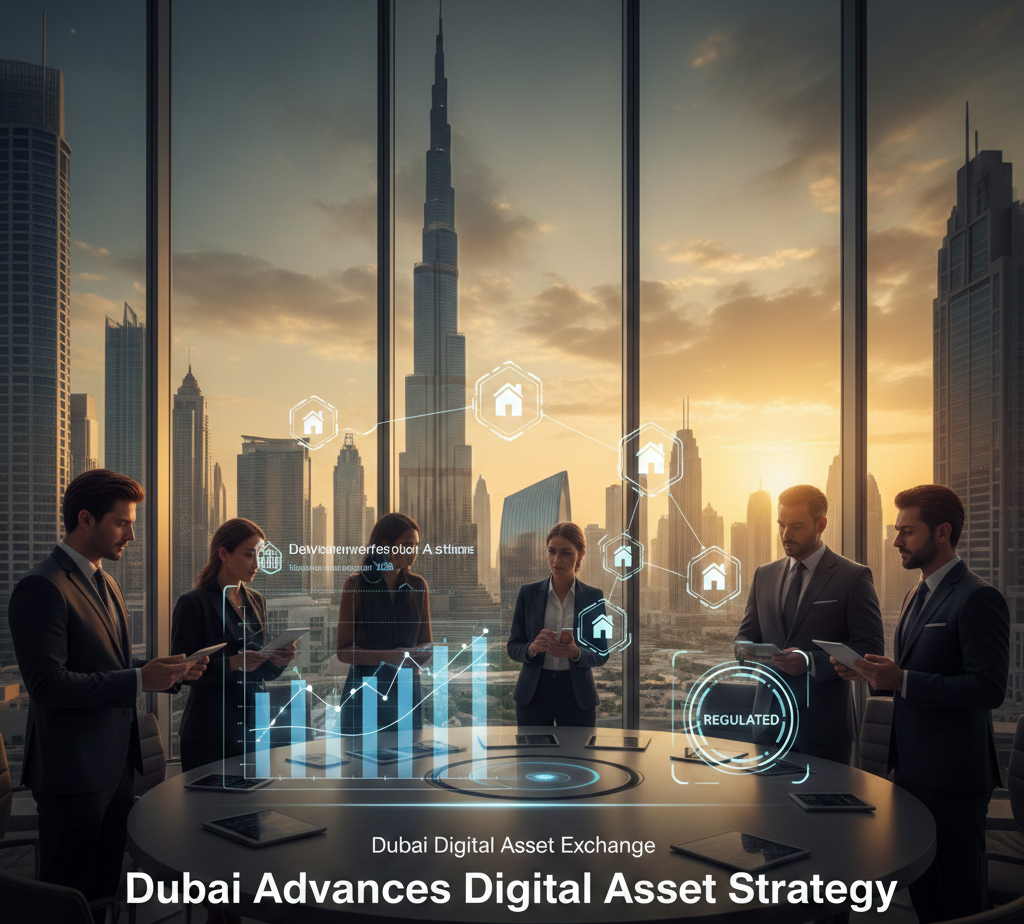
Dubai has taken another decisive step toward reshaping global property investment by expanding regulated secondary trading for tokenised real estate assets. The move signals the emirate’s continued ambition to position itself at the forefront of blockchain-enabled financial infrastructure.
The initiative, led by the Dubai Land Department, transitions a successful pilot programme into a more operational phase. Earlier stages saw 10 properties tokenised, representing approximately $5 million in real estate value. These tokenised assets are now becoming eligible for resale on approved platforms, creating a regulated secondary market for fractional property ownership.
Table of Contents
Market Infrastructure
The programme initially focused on testing legal, technical and operational frameworks for digitising property ownership. With foundational systems now in place, authorities are enabling secondary trading a development that enhances liquidity and broadens investor participation.
Tokenisation allows physical real estate assets to be divided into digital tokens recorded on blockchain infrastructure. Investors can purchase fractional ownership rather than acquiring entire properties, reducing capital barriers while increasing market accessibility.
Technology infrastructure for the project has been developed in partnership with Ctrl Alt, which provides the blockchain framework underpinning ownership records and transaction processes.
Why Secondary Trading Matters
Traditionally, real estate is considered an illiquid asset class. Transactions often involve lengthy documentation processes, significant capital commitments and extended settlement timelines. By introducing regulated secondary trading:
- Investors gain improved liquidity
- Ownership transfers become faster and digitally recorded
- Transparency is enhanced through blockchain verification
- Market participation expands to a broader investor base
The ability to resell tokenised property shares creates a more dynamic ecosystem, bringing real estate closer to capital market functionality while maintaining regulatory safeguards.
Regulatory Oversight and Market Confidence
A key differentiator in Dubai’s approach is regulatory alignment. The framework ensures that token issuance, ownership transfer and secondary trading operate within government-approved structures. This reduces legal ambiguity a common concern in early-stage digital asset markets.
By integrating land registry processes with blockchain-based tokenisation, authorities are creating a unified digital record of ownership and transaction history, strengthening trust and institutional viability.
Strategic Positioning in the Digital Asset Economy
Dubai has consistently advanced policies supporting digital assets, blockchain innovation and financial technology. Expanding tokenised real estate trading aligns with its broader strategy to attract global capital, foster fintech growth and modernise traditional asset classes.
The initiative not only enhances the emirate’s property sector but also establishes a benchmark for how regulated tokenisation of real-world assets can function at scale.
As secondary trading gains traction, the project may serve as a model for other jurisdictions exploring the convergence of real estate and digital finance reinforcing Dubai’s position as a global innovation hub in regulated digital asset markets.
