

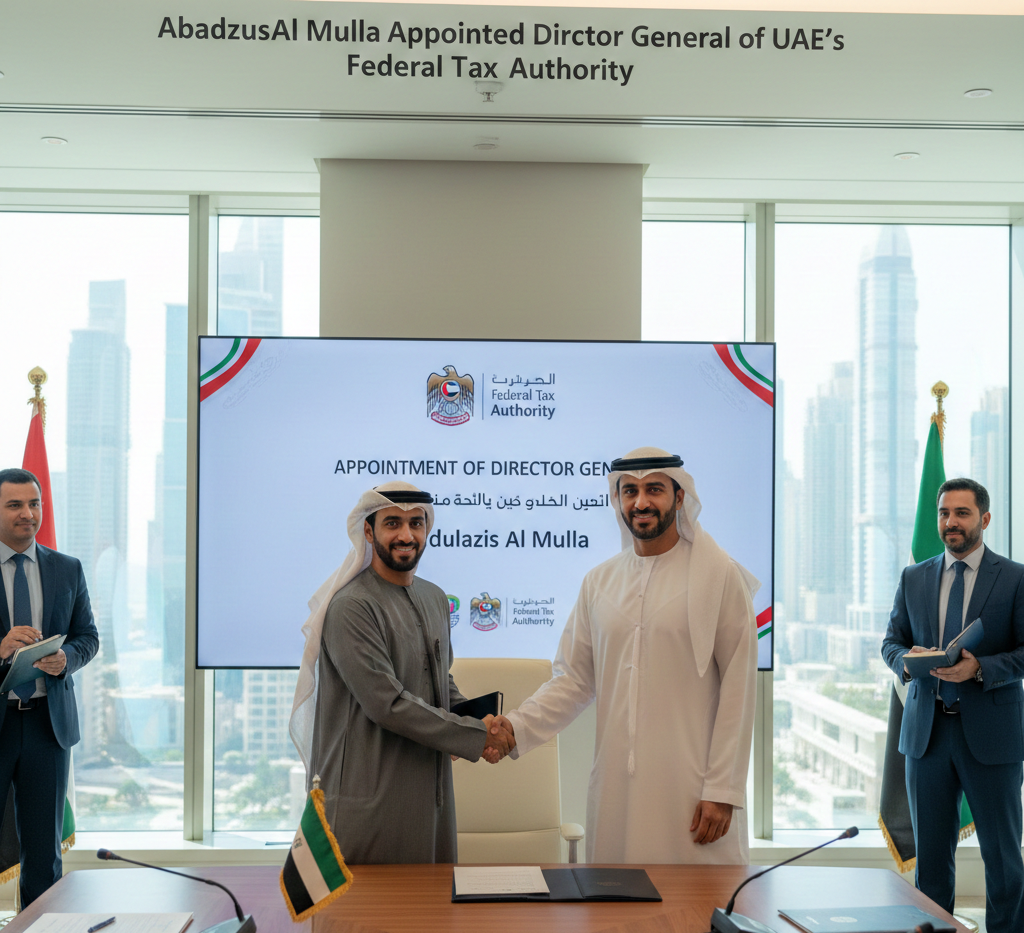
The United Arab Emirates has appointed Abdulaziz Mohammed Faraj Al Mulla as Director General of the Federal Tax Authority (FTA), marking a significant leadership transition at a time of continued evolution in the country’s tax framework.
The appointment was issued by UAE President Mohamed bin Zayed Al Nahyan through a Federal Decree, granting Al Mulla the rank of Ministry Undersecretary. The move underscores the strategic importance of the FTA as the UAE continues strengthening its regulatory, fiscal, and compliance systems.
Table of Contents
A Strategic Leadership Appointment
Al Mulla brings more than 20 years of experience in financial management, economic governance, investment oversight, and public policy development. Prior to this role, he held senior leadership positions within the Government of Dubai, including Managing Director and CEO of the Dubai Investment Fund and Executive Director of the Dubai Financial Support Fund.
His background spans taxation coordination, strategic planning, financial methodology, and digital systems integration experience that aligns closely with the FTA’s expanding responsibilities.
Why This Matters for Businesses
The Federal Tax Authority plays a central role in administering and enforcing the UAE’s tax regime, including:
- Value Added Tax (VAT)
- Corporate Tax
- Excise Tax
- Tax compliance and audit systems
Digital tax platforms and services
In recent years, the FTA has prioritized digital transformation initiatives, including advanced e-services, AI-enabled compliance systems, and streamlined taxpayer services.
While Al Mulla has not yet issued public statements outlining his specific priorities, his experience in governance and financial strategy suggests a continued emphasis on:
- Strengthening regulatory clarity
- Enhancing digital tax infrastructure
- Improving service efficiency for businesses
- Supporting compliance through modernization
Continuity and Modernization
The appointment comes as the UAE continues refining its corporate tax framework and strengthening its global competitiveness as a business hub. Industry observers expect leadership continuity in the FTA’s modernization agenda, particularly in improving service delivery and compliance efficiency for the private sector.
For corporates operating in the UAE, this transition signals stability in tax administration, coupled with a likely sustained focus on digital systems, transparency, and structured governance.
Further insights into Al Mulla’s strategic direction are expected once he formally outlines his agenda for the Authority.
